
What to remember
- Formation numbers normally exclude the goalkeeper.
- Positions divide responsibilities without removing teamwork.
- Small-sided games need their own role agreements.
Read a formation from back to front
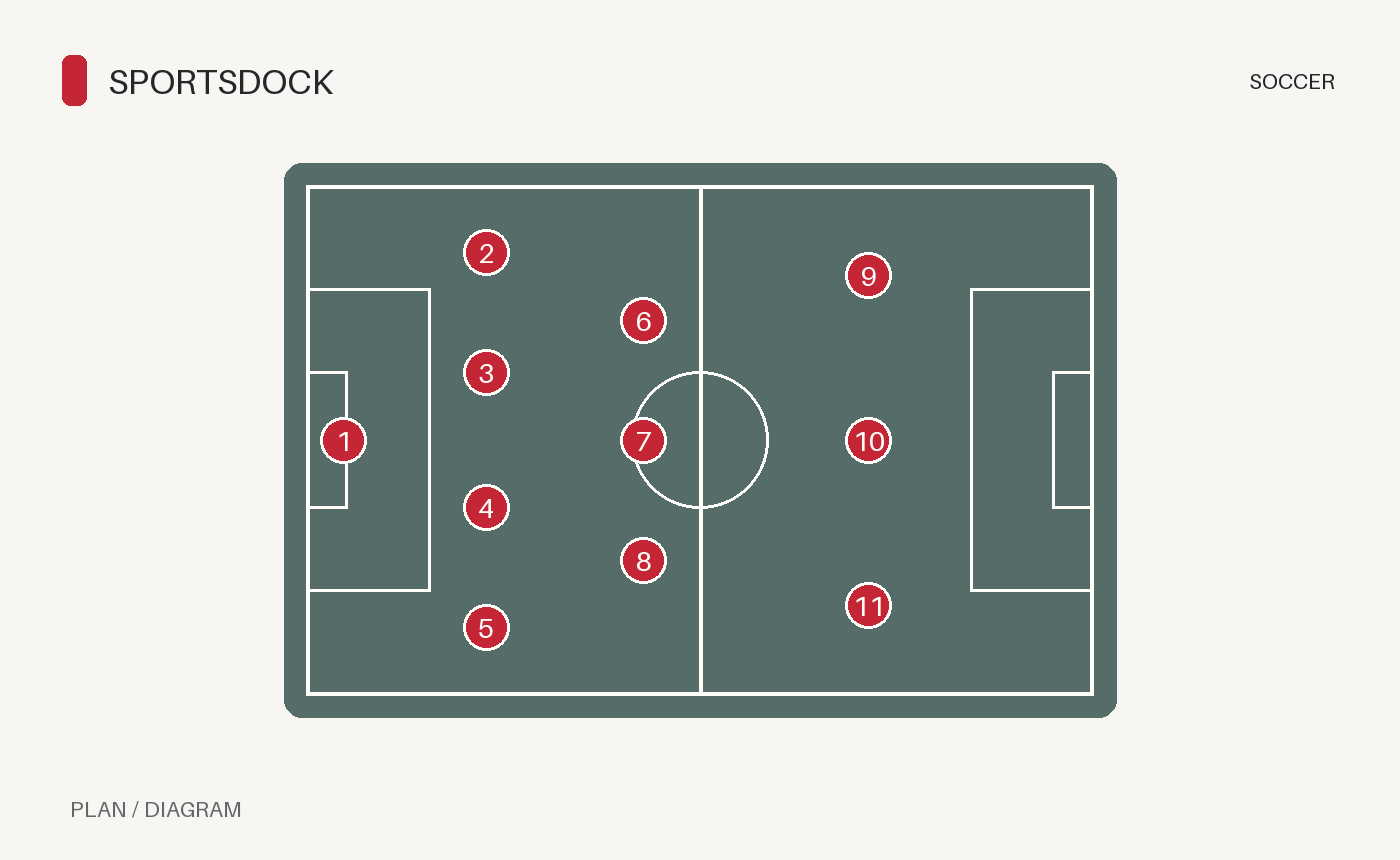
In an 11-a-side 4-3-3, the numbers describe four defenders, three midfielders and three forwards. The goalkeeper is additional to those ten outfield players. A 4-4-2 changes the midfield and forward lines without adding players.
Those labels are common tactical conventions, not roles every recreational match must assign. When joining a new group, ask how many players are on the field and whether it uses fixed positions or flexible areas.
Give each line a clear task
A goalkeeper protects the goal and helps start possession. Centre-backs protect central space, while fullbacks cover wider areas and can support forward play. Midfielders connect the lines. Forwards create passing options and apply pressure higher up the field.
These are starting responsibilities rather than permission to ignore everything else. A forward still needs to help after losing possession. A defender should offer a passing option when their team has the ball.
Apply the role to a real situation
Imagine your right fullback moves forward and the ball is lost. If you are the nearby midfielder, first identify the open space behind that player. Communicate who delays the opponent and who covers the runner.
This is an example of shared coverage, not an official requirement for one formation. Agree on simple cues with teammates. Staying connected to the closest players is more useful than following the ball into a crowded area.
Reduce the structure for small-sided soccer
With fewer players, each person covers more than one job. In a five-player team including a goalkeeper, the four outfield players might agree on one deeper player, two supporting players and one higher option. They can exchange those jobs when someone moves.
Do not transfer an 11-a-side formation directly to a short court. Confirm goalkeeper use, substitutions and any offside or restart adaptations. Venue and organizer rules can change the practical role.
Tell the host what you can contribute
Describe your recent experience, preferred area and comfort with the session’s pace. Avoid claiming a competitive level solely because you know a position’s name.
Use SportsDock’s soccer pages to look for a suitable match. In the group conversation, ask how positions rotate and whether newcomers can try more than one role. A clear answer makes it easier to contribute on the first night.