
What to remember
- Ask about the roster, local rules and rotation before entering a game.
- Apply the same playing-time process to newcomers and regulars.
- Use a calm dispute process and report conduct concerns with concrete details.
What is good pickup game etiquette?
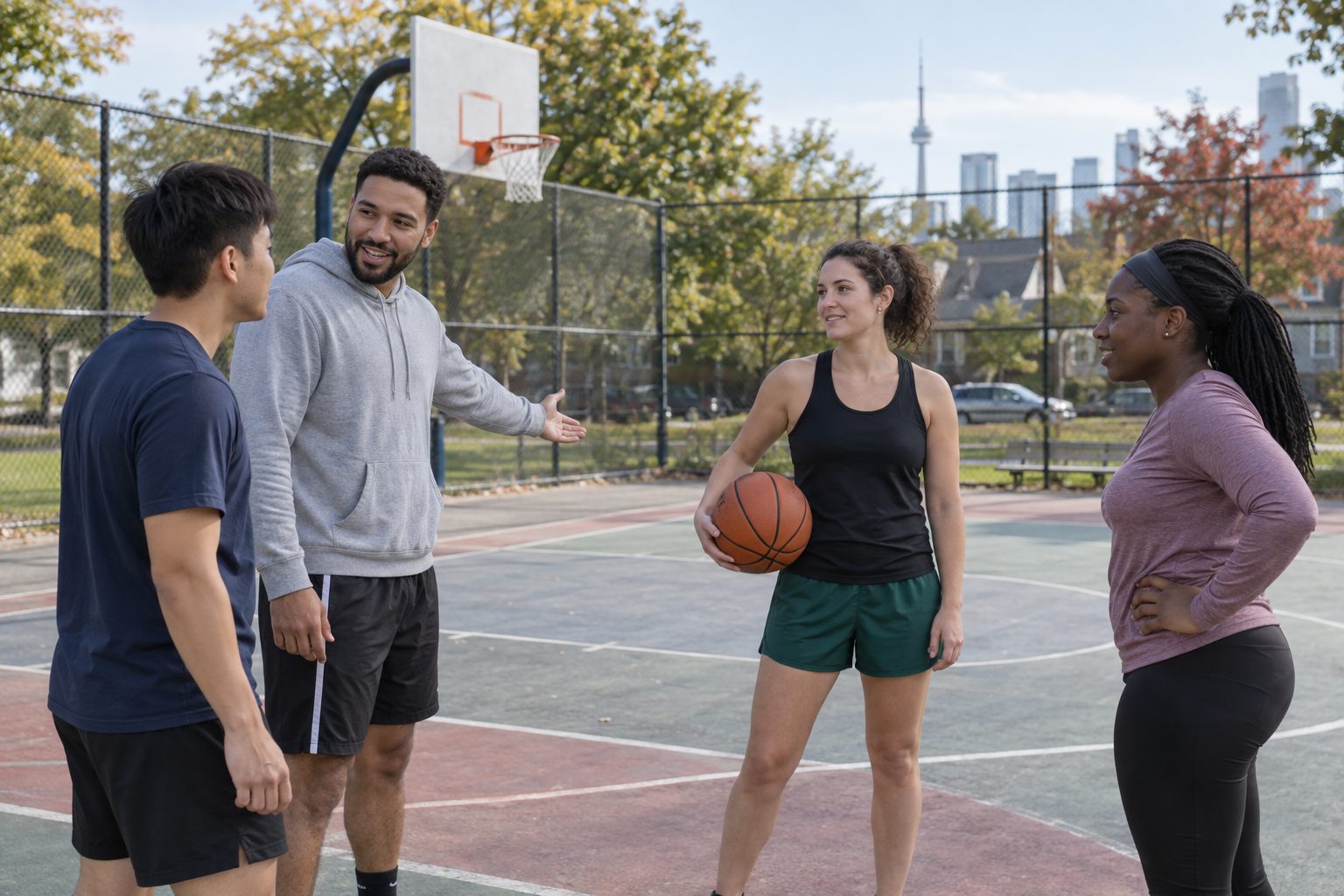
Good pickup game etiquette means following the agreed format, sharing playing time, treating people respectfully and communicating when your plans change. New players should ask how the group runs its games. Regulars should explain the system instead of expecting newcomers to learn through mistakes.
True Sport identifies fairness, respect, inclusion and enjoyment among its principles for sport. The routines below are our practical application to adult pickup sessions. They are suggested house practices, not a replacement for the rules set by your venue or organizer.
What should a first-time player ask on arrival?
Introduce yourself to the host and confirm that you are on the expected roster. Ask how the next group enters, how substitutions work and who explains disputed calls. If the level looks different from the listing, speak with the host before the next round.
Arrive with enough time for the venue’s check-in process, while respecting its access window. Do not start playing in spare-looking space without checking whether it belongs to another booking.
- Where do I check in and leave my bag?
- Which team am I on, and when do I enter?
- Do we rotate by time, points or another agreed rule?
- Who handles an unresolved call?
- Are there contact limits or local rules I should know?
Make court rotation visible to everyone
Write down or explain the order before play. If a waiting team has the next round, do not replace it with friends who arrived later. Apply the same process to regulars and newcomers. A host can change the format, but should explain the change to everyone affected.
UTM’s drop-in guidance gives a concrete example by asking players to share space and rotate after ten minutes. That time limit belongs to its program. Your group should follow its own confirmed rules instead of assuming every court uses ten-minute games.
Example for a short recreational session, the host announces a rotation time and introduces the next group before the current round ends. A newcomer can then see how they will get playing time without interrupting the game to ask repeatedly.
Agree on a reset for disputed calls
Before a self-officiated game, decide what happens when players disagree. A group might let the host resolve the call or replay the point when the sport and house rules allow it. Choose the process before there is a score to argue about.
When a disagreement happens, pause, state what you saw without a personal accusation and follow the agreed process. A disputed point is not permission for insults, intimidation or escalating physical contact. If conduct becomes threatening, stop participating and get help from the host or venue staff.
A short welcome script for hosts
Adapt this briefing, Welcome, especially if this is your first game here. We will explain the teams and rotation before starting. Tell me if you are unsure when to enter. Follow the contact rules we agreed on, and bring unresolved calls to me. Personal insults and discriminatory comments are not acceptable.
Give players a way to ask a question privately. Ask before posting identifiable photos of people from the session. Do not treat somebody’s willingness to play as agreement to appear in promotion.
After play, check whether newcomers understood the format and got the expected opportunity to participate. A useful next step is a clearer rotation rule or better introduction, not a public argument about who was the weakest player.
Use SportsDock communication and reports appropriately
Keep your attendance intentions current and tell the host when you cannot make it. SportsDock provides player reporting and blocking tools. Use a report for conduct concerns and describe what happened, when it happened and the relevant context. Avoid posting personal accusations into a group chat.
Product tools cannot guarantee another person’s behaviour or resolve an immediate on-court emergency. Use the host and venue staff for immediate support. To find your next session, explore SportsDock by sport and city and look for a format and level that suit you.