
What to remember
- Let the serve and return bounce before volleying.
- The kitchen restriction concerns volleys, including momentum.
- Confirm the scoring system before using a doubles score sequence.
Start the rally with the right serve
Serve diagonally into the opposite service court, beyond the non-volley zone. For a volley serve, the paddle moves upward and contacts the ball below the waist. A permitted drop serve has its own conditions. Check the current official rulebook for the complete requirements.
For a first session, practise sending a controlled ball to the correct service box before chasing speed. Ask the organizer which serve they will demonstrate and whether the group uses traditional or rally scoring.
Let the ball bounce on both sides
The receiving team must let the serve bounce. The serving team must let the return bounce. After those two bounces, players can volley or play the ball after a bounce.
A useful beginner sequence is serve, bounce, return, bounce, then play. Say the sequence aloud during practice. If your partner rushes forward after serving, remind them that your team still needs to let the return land.
Understand the kitchen without avoiding it
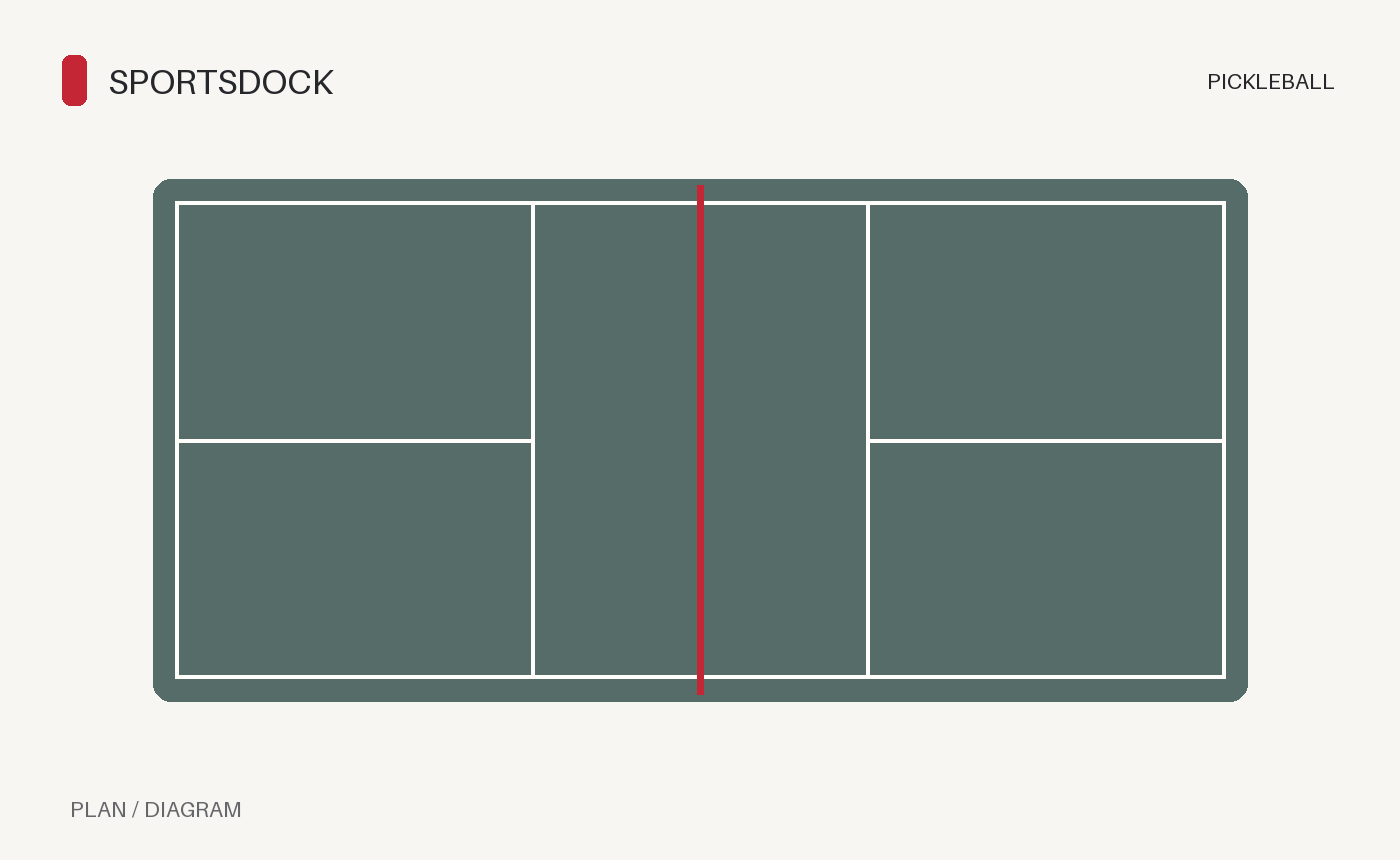
The non-volley zone, often called the kitchen, is not a permanently forbidden area. You can enter it to play a ball that has bounced. You cannot volley while touching the zone or its line, and momentum from a volley cannot carry you into it.
Practise one clear distinction with a partner. A soft ball that bounces in the kitchen can be played from inside it. A ball still in the air requires you to respect the volley restriction.
Work through a doubles score
Under traditional side-out scoring, only the serving side scores. Games commonly go to 11, with a two-point margin. Doubles announces the serving team score, receiving team score and server number. The opening service turn begins at 0-0-2.
For example, at 3-2-1, the first server wins the rally. The score becomes 4-2-1 and that server changes service courts. If that server then loses a rally, the partner serves at 4-2-2. This example describes traditional scoring, not every permitted format.
Agree on the game before joining
Confirm scoring, partner rotation, court access and equipment with the host. A court booking and a game roster are separate arrangements. The linked Pickleball Canada rulebook is the reference for formal play, while a recreational group should clearly identify its adaptations.
Use the SportsDock pickleball page to look for a suitable game or organize one. State the format and expected level so the next player can decide whether the session fits.